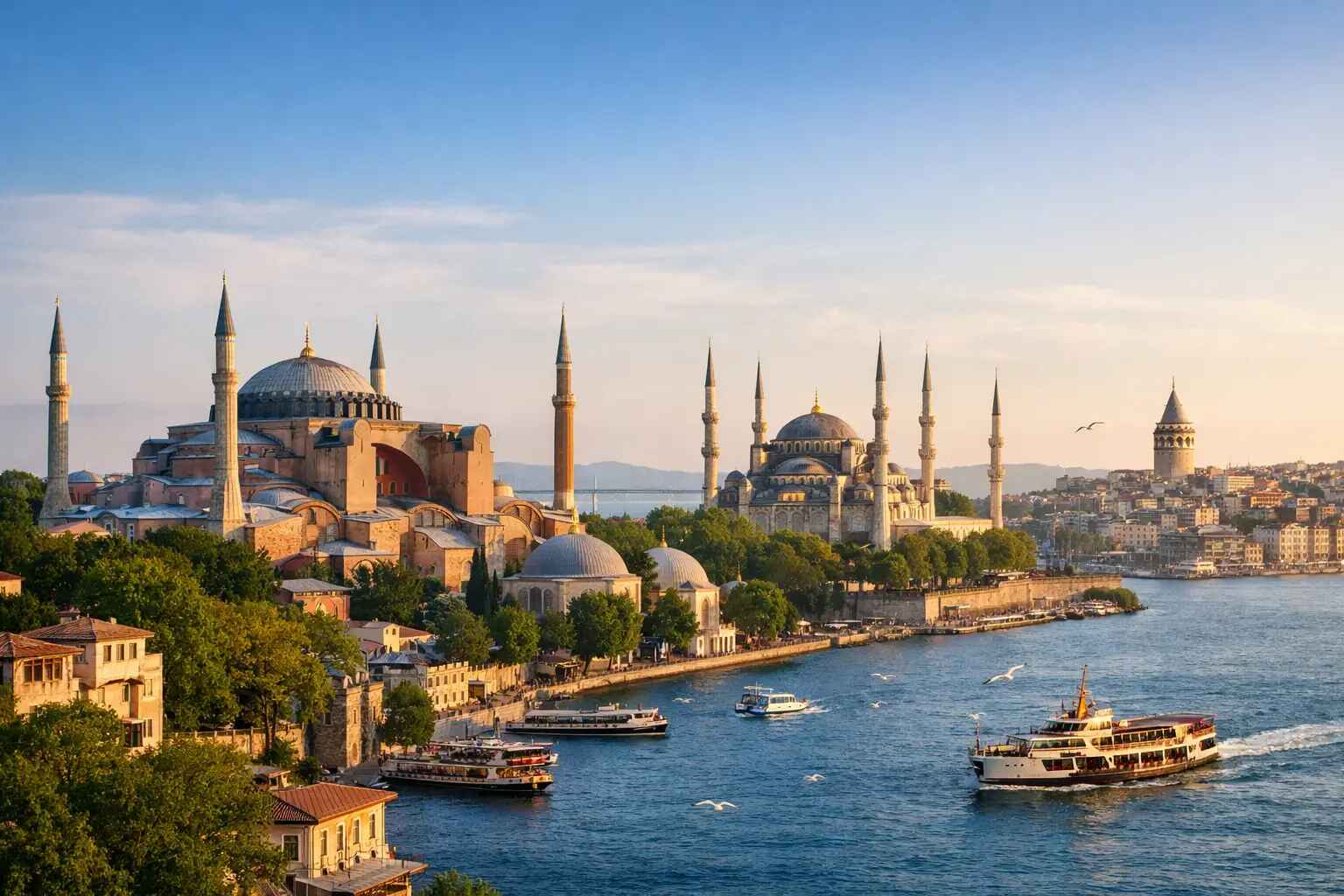
Some cities ask for a loose itinerary. Istanbul does not. Between ferry crossings, hilltop neighborhoods, palace grounds, mosque courtyards, and traffic that can change the pace of your day, seeing the landmarks of Istanbul – the most touristic locations – is far easier when your route is planned with comfort in mind.
For travelers who value their time, the city rewards a structured approach. Istanbul’s headline attractions are remarkable, but they are spread across districts with very different rhythms. A smooth day here is not just about what you visit. It is also about when you go, how long you stay, and how efficiently you move between stops.
Landmarks of Istanbul – the most touristic locations worth prioritizing
If you only have one or two days, start with Sultanahmet. This is where Istanbul presents its imperial identity in the clearest way, with monuments that shaped both Byzantine and Ottoman history. Hagia Sophia is the obvious anchor. Its scale, age, and layered past make it more than a photo stop. It is one of those rare places that still feels larger than expectation, even if you have seen it in books for years.
Just across the square, the Blue Mosque offers a different kind of grandeur. The exterior is balanced and commanding, while the interior feels softer and more atmospheric. Because it remains an active place of worship, timing matters. Prayer hours affect visitor access, so flexibility is useful if you want to avoid waiting and crowds building outside.
A short walk away, the Basilica Cistern adds contrast. After the open squares and daylight stonework above ground, its underground columns and dim reflections create a quieter, more theatrical experience. It is not the largest attraction on paper, but it often becomes one of the most memorable because the mood is so distinct.
Topkapi Palace deserves real time rather than a quick pass. Many visitors underestimate its size and the number of courtyards, chambers, and panoramic terraces inside. This was the administrative and ceremonial heart of the Ottoman Empire, and the experience is less about one dramatic room than the accumulation of spaces. If you rush it, the palace can feel fragmented. If you give it time, it feels substantial.
The Grand Bazaar and Spice Bazaar belong on most itineraries, though they serve different purposes. The Grand Bazaar is larger, denser, and more theatrical. The Spice Bazaar is smaller and often easier to navigate. Both are worth seeing for atmosphere alone, even if you are not shopping seriously. Still, they are best approached with realistic expectations. If you want calm, they may feel intense. If you enjoy energy and visual abundance, they are part of the city’s appeal.
The landmarks of Istanbul beyond the historic core
Sultanahmet is only one version of Istanbul. To understand the city more fully, you need to cross the water or move north along the Bosphorus. This is where the experience becomes less museum-like and more cinematic.
Galata Tower remains one of the most recognized silhouettes in the city. The surrounding streets, with their cafes, boutiques, and steady uphill climbs, add to the appeal. The tower itself offers broad views, but the approach can be crowded and lines are common during peak periods. If panoramic views matter to you, it is worth considering whether you want the tower experience specifically or simply a strong vantage point in the district.
Dolmabahce Palace presents Ottoman power in a different register from Topkapi. Where Topkapi is layered, sprawling, and rooted in earlier court traditions, Dolmabahce is formal, European-influenced, and immediately lavish. Crystal chandeliers, ceremonial halls, and Bosphorus-facing façades give it a polished grandeur. For travelers drawn to architecture and royal interiors, this is one of the city’s most rewarding visits.
The Bosphorus itself is not a single monument, but it is one of Istanbul’s essential experiences. Waterside mansions, historic fortresses, elegant hotels, and hillside neighborhoods create a shifting panorama that no static landmark can match. If your schedule allows, seeing the city from the water adds perspective that street-level travel cannot provide. It also changes the pace of the day. After dense urban sightseeing, the Bosphorus feels open and restorative.
On the Asian side, Maiden’s Tower continues to attract attention for its location alone. It is more about setting than scale. Framed by the water with the city behind it, it is one of those landmarks that photographs beautifully from multiple angles. Nearby Uskudar also gives you a calmer counterpoint to the busier European districts.
How to plan these most touristic locations without wasting time
The main mistake visitors make is assuming proximity on a map means easy movement in real life. Istanbul’s traffic, elevation, pedestrian density, and entry lines can all stretch a simple route into a tiring day. That is why the city favors travelers who group landmarks by area rather than trying to check off everything in one sweep.
A practical first day usually centers on Sultanahmet. Hagia Sophia, the Blue Mosque, Basilica Cistern, Topkapi Palace, and one of the bazaars fit naturally together. Even then, you may need to choose between depth and speed. If you like to linger, one palace and three major stops may be enough.
A second day works well for Dolmabahce Palace, Galata, and a Bosphorus segment. This could mean a cruise, a private yacht experience, or simply spending time along the waterfront neighborhoods. The advantage of this route is balance. You move from interiors to views, then from urban energy to open water.
For families, comfort should shape the plan even more decisively. Queue-heavy attractions, steep streets, and long transfers can wear down children and older travelers quickly. Business travelers with limited leisure time face a different challenge. They may only have a half day between meetings, which makes route efficiency more important than ambition.
When luxury and reliability matter most in Istanbul
There is a reason premium travelers tend to organize transport in advance here. Istanbul is not difficult in the abstract, but it can be tiring in practice. Airports are busy, hotel zones vary greatly, and moving between key attractions often involves trade-offs between speed, comfort, and certainty.
Public transport is useful in some scenarios, especially if you are traveling light and staying near major lines. Taxis can work too, but quality and consistency may vary. For visitors arriving after a long flight, traveling with family, carrying significant luggage, or keeping a tightly managed schedule, a pre-arranged private transfer is often the calmer choice.
That same logic applies to sightseeing days. If your priority is privacy, punctuality, and a polished experience from one district to the next, dedicated chauffeur service removes many of the small frictions that can affect the day. Vehiclize fits naturally into that kind of itinerary, particularly for travelers who want fixed pricing, professional drivers, and the confidence that their time in the city will not be shaped by transport uncertainty.
What each landmark is really best for
Not every famous site delivers the same kind of experience. Hagia Sophia is best for historical weight and visual impact. The Blue Mosque stands out for atmosphere and active spiritual life. Topkapi Palace rewards travelers who enjoy imperial history and can give it time. Dolmabahce is ideal for guests who prefer polished interiors and grand ceremonial spaces.
The bazaars are strongest for sensory energy rather than quiet appreciation. Galata works well for neighborhood character and city views. The Bosphorus is best when you want Istanbul to feel expansive rather than crowded. That distinction matters because the right itinerary depends on your travel style.
If this is your first visit, the classic icons are non-negotiable. If you are returning, you may get more pleasure from combining one or two major landmarks with a slower, more comfortable day on the water or along the shoreline. Istanbul supports both approaches, and the better one depends on whether you want maximum coverage or a more refined pace.
A smarter way to experience Istanbul’s landmarks
The most satisfying visits usually leave breathing room. That may mean arriving at Hagia Sophia early, scheduling Topkapi for a longer afternoon, or keeping the Bosphorus for sunset rather than trying to force one more indoor stop. In a city with this much depth, efficiency is valuable, but so is restraint.
Istanbul’s great landmarks have endured for centuries. They do not need to be rushed to be impressive. Give yourself the advantage of good timing, comfortable transport, and an itinerary that respects the city’s scale, and the experience feels less like a checklist and more like the premium journey it should be.
If you plan the city well, its most touristic locations stop feeling crowded and complicated and start feeling what they truly are – world-class places worth arriving at in comfort.